Boston Bailiff Enforcement: Know Your Rights
Bailiffs cannot force entry to your home for a parking debt. Upload your documents and Parking Mate AI checks whether you can still challenge the underlying PCN.
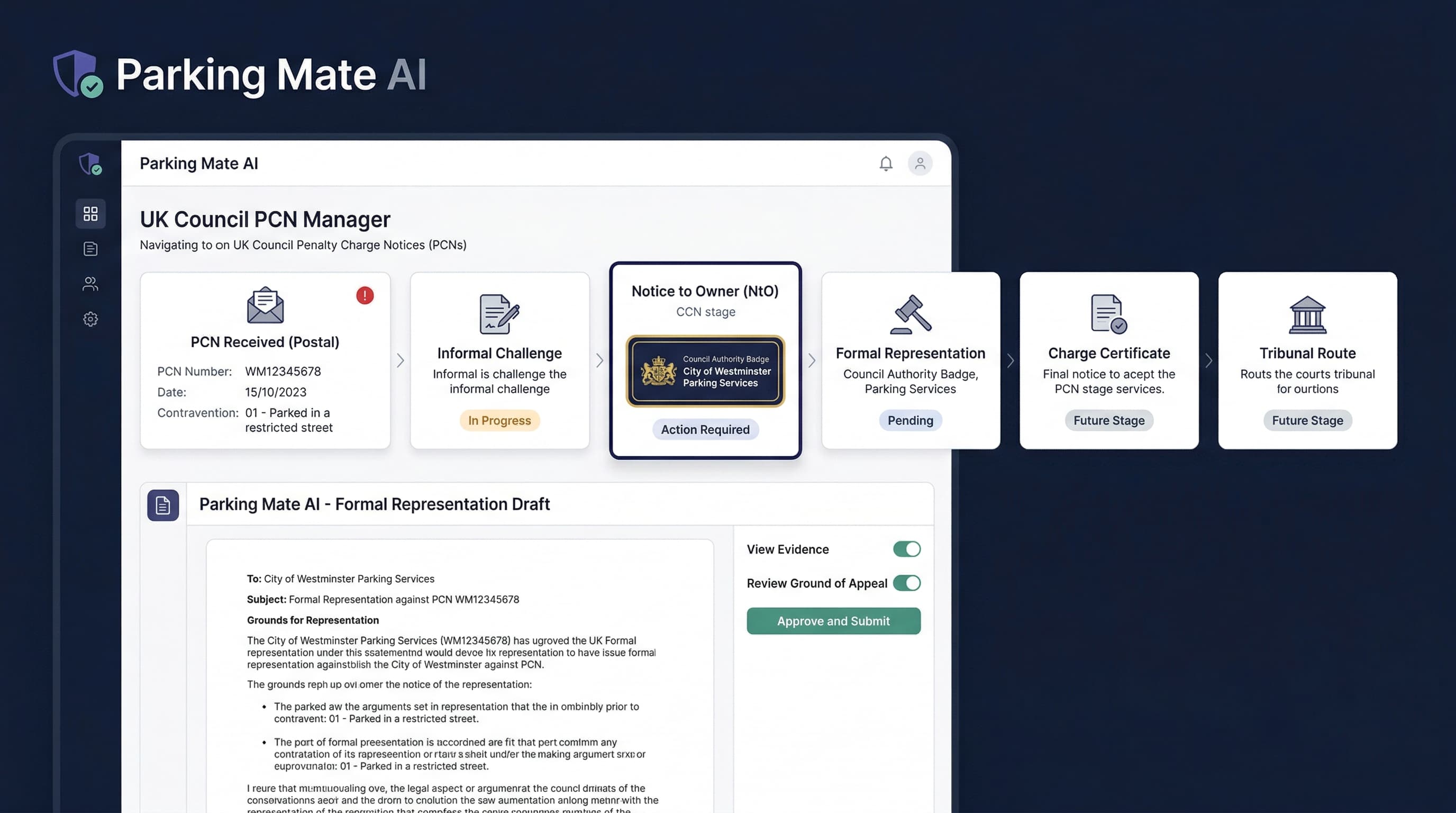
If bailiffs are enforcing a Boston parking debt, know your rights. They cannot force entry to your home for a parking debt under the Taking Control of Goods Regulations 2013. You may still be able to challenge the underlying PCN by filing a TE9 statutory declaration or TE7 witness statement at the Traffic Enforcement Centre. Parking Mate AI analyses the original notice and enforcement history to identify whether challenge routes remain available.
What is Boston bailiff enforcement for parking debt?
Bailiff enforcement (also called enforcement agent action) is the final stage of the Boston parking debt escalation process. It follows the PCN, notice to owner, charge certificate, TEC registration, order for recovery, and notice of enforcement stages.
Bailiffs enforcing a Boston parking debt are governed by the Taking Control of Goods Regulations 2013. They cannot force entry to your home. Parking debts are classified as non-priority debts, which means bailiffs can only enter through a door you open for them or one that is already open.
Even at this late stage, you may still have options. If you did not receive earlier notices, or if the original Boston PCN has defects, you can apply for a TE9 or TE7 at the Traffic Enforcement Centre. If accepted, the enforcement is revoked and the case reopens.
Parking Mate AI analyses the original Boston PCN and the full enforcement history. If challenge routes are available, the service prepares the necessary documents. In the meantime, do not let bailiffs into your home and request their documentation.
Boston bailiff enforcement challenge grounds
Non-receipt of earlier notices
If you did not receive the Boston PCN, notice to owner, charge certificate, or order for recovery, a TE9 statutory declaration can revoke the enforcement entirely.
Original PCN defects
Defects in the original Boston penalty charge notice, such as signage failures, incorrect contravention codes, and service errors, remain relevant even at the bailiff stage.
Unlawful bailiff conduct
Bailiffs who attempt to force entry, use threats, misrepresent their powers, or visit at unsociable hours for a Boston parking debt are acting unlawfully.
Excessive fees
Bailiff fees must follow the statutory scale (£75 compliance, £235 enforcement, £110 sale). Any fees above these amounts are unlawful and can be challenged.
Controlled goods violations
Bailiffs must follow strict rules when taking control of goods. They cannot take essential items, tools of trade up to £1,350 in value, or items belonging to other people.
Evidence for your Boston bailiff enforcement challenge
All correspondence from the bailiff firm including the notice of enforcement
Copies of the order for recovery, charge certificate, and original Boston PCN (if received)
Records of all bailiff visits including dates, times, names, and what was said or done
Photographs or video of any bailiff visit (if safe to record)
Proof of address if Boston sent notices to an incorrect address
Evidence of defects in the original Boston penalty charge notice
Other Boston PCN help
Boston Penalty Charge Appeal
Learn how to appeal a penalty charge notice from Boston.
Boston Charge Certificate Appeal
Learn how to challenge a charge certificate from Boston.
Boston Order for Recovery
Learn how to challenge an order for recovery from Boston.
Boston Notice of Enforcement
Learn how to respond to a notice of enforcement from Boston.
Boston Bus Lane PCN
Learn how to appeal a bus lane penalty charge notice from Boston.
Boston Moving Traffic PCN
Learn how to appeal a moving traffic penalty charge notice from Boston.
Boston Restricted Street PCN
Learn how to appeal a restricted street penalty charge notice from Boston.
Boston Paid Parking PCN
Learn how to appeal a paid parking penalty charge notice from Boston.
Boston Permit Parking PCN
Learn how to appeal a permit parking penalty charge notice from Boston.
Boston Off-Street Parking PCN
Learn how to appeal an off-street parking penalty charge notice from Boston.
Boston Bailiff Enforcement FAQs
Common questions about Boston bailiff enforcements and how Parking Mate AI can help.
What happens when Boston bailiffs arrive at my door?
If bailiffs arrive for a Boston parking debt, they must identify themselves, show their certificate and documentation, and explain why they are there. They cannot force entry to your home for a parking debt. You do not have to let them in. Remain calm and ask for their paperwork.
Can Boston bailiffs force entry for a parking debt?
No. Bailiffs enforcing a Boston parking debt cannot force entry to your home under any circumstances. Parking debts are non-priority debts under the Taking Control of Goods Regulations 2013. They can only enter through a door you open for them or one that is already open. They cannot climb through windows or break locks.
What are my rights when Boston bailiffs visit?
You have the right to refuse entry for a Boston parking debt. You have the right to ask for identification and documentation. You have the right to complain about bailiff conduct. Bailiffs must not use threatening behaviour, visit at unsociable hours, or misrepresent their powers of entry.
Can I still challenge a Boston PCN at the bailiff stage?
Yes. Even at the bailiff enforcement stage, you can apply for a TE9 statutory declaration or TE7 witness statement at the Traffic Enforcement Centre if there are valid grounds. If accepted, the enforcement is revoked and the case reopens. Parking Mate AI identifies whether grounds exist.
What are the controlled goods regulations for Boston parking debts?
The Taking Control of Goods Regulations 2013 govern how bailiffs can enforce Boston parking debts. They set rules on entry, inventory of goods, removal timescales, and fee levels. Bailiffs who breach these regulations can be challenged through a formal complaint or court application.
How much can Boston bailiffs charge in fees?
Bailiff fees for Boston parking debts follow a statutory scale: £75 at the compliance stage, £235 at the enforcement stage (first visit), and £110 at the sale stage. Any fees charged above these amounts are unlawful. If the underlying PCN is successfully challenged, all fees are cancelled.
Can I complain about Boston bailiff behaviour?
Yes. If a bailiff enforcing a Boston parking debt behaves unlawfully or inappropriately, you can complain to the bailiff company, to Boston, and to the relevant professional body. Common grounds for complaint include threats, forced entry attempts, and misrepresentation of powers.
Can Parking Mate AI help if Boston bailiffs are at my door?
Yes. Parking Mate AI can analyse the original Boston PCN and enforcement history to identify defects and challenge routes. If a TE9 or TE7 is available, the service prepares the paperwork. In the immediate moment, do not let bailiffs in and ask for their documentation while you check your options.
What should I not do when Boston bailiffs visit?
Do not open the door if you are not sure of your rights. Do not let bailiffs into your home as this gives them the right to inventory goods. Do not sign any agreement or payment plan under pressure. Do not hand over goods or cash at the doorstep. Take time to check your Boston PCN for defects first.
Is it too late to challenge a Boston parking debt at bailiff stage?
It is not necessarily too late. If there are defects in the original Boston PCN or procedural failures in the enforcement process, a TE9 or TE7 application at the Traffic Enforcement Centre can revoke the enforcement and reopen the case. Parking Mate AI checks your options at every stage.
Need help with your Boston bailiff enforcement?
Upload your notice from Boston for a free Parking Mate AI defect check. If grounds are found, get a professional bailiff enforcement letter ready to send.
