Kensington and Chelsea Moving Traffic PCN: Check Signage and Camera Evidence
Moving traffic PCNs from Kensington and Chelsea cover box junctions, banned turns, and one-way streets. Upload your notice and Parking Mate AI checks TSRGD compliance.
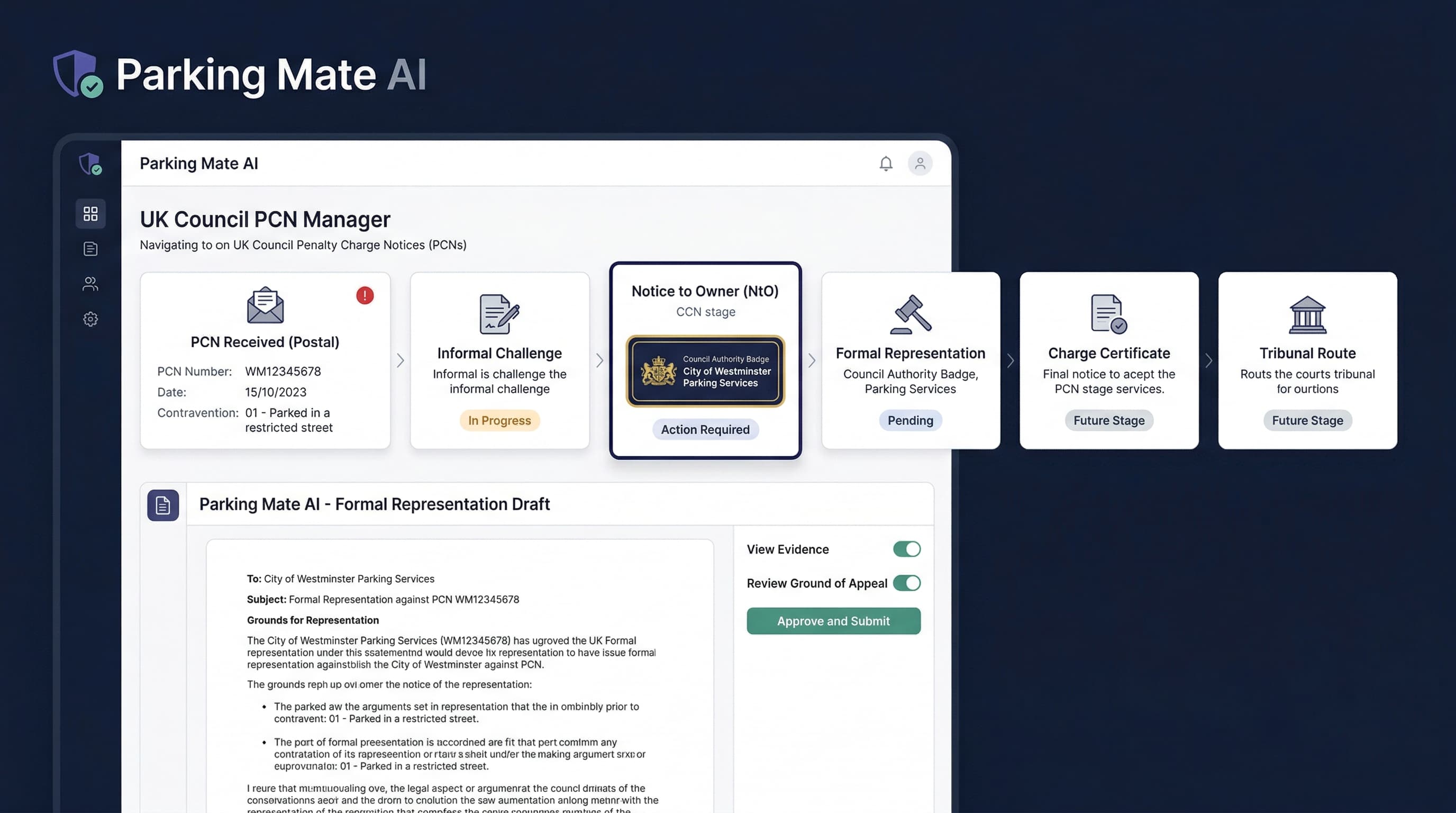
A moving traffic penalty charge notice from Kensington and Chelsea is issued by CCTV camera for offences such as driving through a box junction when the exit is not clear, making a banned turn, entering a one-way street, or passing through a no-entry zone. Royal Borough of Kensington and Chelsea must display TSRGD-compliant signage at every moving traffic enforcement location. Parking Mate AI checks signage, camera evidence, and procedural compliance to identify defects that could support your appeal.
What is a Kensington and Chelsea moving traffic PCN?
A moving traffic PCN from Kensington and Chelsea is a penalty charge notice for a driving contravention as opposed to a parking contravention. Common moving traffic offences include box junction violations, banned turns, one-way street offences, and no-entry contraventions.
These PCNs are enforced by CCTV camera. Royal Borough of Kensington and Chelsea must have proper authorisation for camera enforcement at each location, and the signage must comply with the Traffic Signs Regulations and General Directions (TSRGD).
TSRGD compliance is one of the most common grounds for successful challenge. Every moving traffic restriction requires specific signs and road markings. If these are missing, obscured, or do not match the prescribed TSRGD diagrams, the restriction may be unenforceable.
Parking Mate AI checks your Kensington and Chelsea moving traffic PCN against TSRGD requirements, camera evidence standards, and service timelines. If defects are found, you receive a professional appeal letter for formal representations to Royal Borough of Kensington and Chelsea or appeal to London Tribunals.
Common Kensington and Chelsea moving traffic PCN defects
TSRGD signage non-compliance
Every Kensington and Chelsea moving traffic restriction requires specific TSRGD-prescribed signs. Missing, incorrect, or non-compliant signage can render the restriction unenforceable.
Camera evidence defects
CCTV evidence must clearly show the vehicle committing the alleged contravention. Unclear images, incorrect timestamps, and ambiguous footage are common defects.
Box junction right-turn exemption
You are allowed to enter a box junction to turn right if your exit is blocked only by oncoming traffic. This is a common and frequently successful ground for challenge.
Road marking defects
Moving traffic restrictions require correct road markings in addition to signs. Faded, missing, or incorrectly applied markings can support a challenge.
Incorrect contravention code
The contravention code on your Kensington and Chelsea moving traffic PCN must accurately describe the alleged offence. A mismatch is a procedural defect.
Evidence for your Kensington and Chelsea moving traffic PCN appeal
Photographs of signage at the Kensington and Chelsea moving traffic location
Photographs of road markings at the location
The CCTV evidence images provided by Royal Borough of Kensington and Chelsea
Dashcam footage showing the circumstances of the alleged contravention
Google Street View images showing signage and road layout
Any traffic management order documentation (available from Royal Borough of Kensington and Chelsea on request)
Other Kensington and Chelsea PCN help
Kensington and Chelsea Penalty Charge Appeal
Learn how to appeal a penalty charge notice from Kensington and Chelsea.
Kensington and Chelsea Charge Certificate Appeal
Learn how to challenge a charge certificate from Kensington and Chelsea.
Kensington and Chelsea Order for Recovery
Learn how to challenge an order for recovery from Kensington and Chelsea.
Kensington and Chelsea Notice of Enforcement
Learn how to respond to a notice of enforcement from Kensington and Chelsea.
Kensington and Chelsea Bailiff Enforcement
Learn how to deal with bailiff enforcement for a parking debt from Kensington and Chelsea.
Kensington and Chelsea Bus Lane PCN
Learn how to appeal a bus lane penalty charge notice from Kensington and Chelsea.
Kensington and Chelsea Restricted Street PCN
Learn how to appeal a restricted street penalty charge notice from Kensington and Chelsea.
Kensington and Chelsea Paid Parking PCN
Learn how to appeal a paid parking penalty charge notice from Kensington and Chelsea.
Kensington and Chelsea Permit Parking PCN
Learn how to appeal a permit parking penalty charge notice from Kensington and Chelsea.
Kensington and Chelsea Off-Street Parking PCN
Learn how to appeal an off-street parking penalty charge notice from Kensington and Chelsea.
Kensington and Chelsea Moving Traffic PCN FAQs
Common questions about Kensington and Chelsea moving traffic PCNs and how Parking Mate AI can help.
How do I appeal a Kensington and Chelsea moving traffic PCN?
To appeal a Kensington and Chelsea moving traffic penalty charge notice, make informal representations to Royal Borough of Kensington and Chelsea within 28 days. Moving traffic PCNs cover box junctions, banned turns, one-way streets, and other moving offences. Parking Mate AI checks your notice for signage, camera, and procedural defects.
What are Kensington and Chelsea moving traffic contraventions?
Kensington and Chelsea moving traffic contraventions include driving through a box junction when the exit is not clear, making a banned turn, entering a one-way street the wrong way, and driving through a no-entry zone. These are enforced by CCTV camera and must comply with TSRGD signage requirements.
Does Kensington and Chelsea use CCTV for moving traffic enforcement?
Yes. Kensington and Chelsea moving traffic PCNs are issued by CCTV camera. The camera evidence must clearly show the contravention, include accurate timestamps, and the camera must be properly authorised for enforcement at that location. Parking Mate AI checks all of these requirements.
What signage must Kensington and Chelsea display for moving traffic restrictions?
Kensington and Chelsea must display TSRGD-compliant signage for every moving traffic restriction. This includes correct diagram numbers, legible text, and proper positioning. Missing, obscured, or non-compliant signage is one of the most common grounds for a successful Kensington and Chelsea moving traffic PCN appeal.
How much is a Kensington and Chelsea moving traffic fine?
A Kensington and Chelsea moving traffic PCN is typically a higher-band contravention carrying a penalty of up to £160, reduced to £80 if paid within 14 days. Challenging the PCN suspends the payment deadline until the challenge is resolved.
Can I appeal a Kensington and Chelsea moving traffic PCN to London Tribunals?
Yes. If Royal Borough of Kensington and Chelsea rejects your formal representations, you can appeal a Kensington and Chelsea moving traffic PCN to London Tribunals within 28 days. An independent adjudicator will review the camera evidence, signage, and procedural compliance.
What is TSRGD and how does it affect my Kensington and Chelsea moving traffic PCN?
TSRGD stands for the Traffic Signs Regulations and General Directions. It sets the legal requirements for road signs and markings in England and Wales. If Kensington and Chelsea moving traffic signage does not comply with TSRGD, the restriction may not be legally enforceable and the PCN may be invalid.
Can Parking Mate AI help with a Kensington and Chelsea moving traffic PCN?
Yes. Upload your Kensington and Chelsea moving traffic PCN and Parking Mate AI checks TSRGD signage compliance, camera evidence quality, contravention codes, and service timelines. If defects are found, you receive a professional appeal letter citing the specific grounds.
What is a box junction Kensington and Chelsea PCN?
A box junction PCN from Kensington and Chelsea is issued when a camera records a vehicle stopping in a yellow box junction when the exit is not clear. However, you are allowed to enter a box junction to turn right if your exit is blocked only by oncoming traffic. This is a common ground for challenging Kensington and Chelsea box junction PCNs.
What evidence do I need for a Kensington and Chelsea moving traffic PCN appeal?
Key evidence for a Kensington and Chelsea moving traffic PCN appeal includes photographs of the signage at the location, dashcam footage showing the circumstances, Google Street View images, and the camera evidence provided by Royal Borough of Kensington and Chelsea. Parking Mate AI identifies exactly what you need.
Need help with your Kensington and Chelsea moving traffic PCN?
Upload your notice from Royal Borough of Kensington and Chelsea for a free Parking Mate AI defect check. If grounds are found, get a professional moving traffic PCN letter ready to send.
