Got a Smart parking charge notice? Check it for defects
Smart Parking tickets must meet specific signage, timing, and wording requirements. Upload yours and Parking Mate AI checks for issues that could get it cancelled.
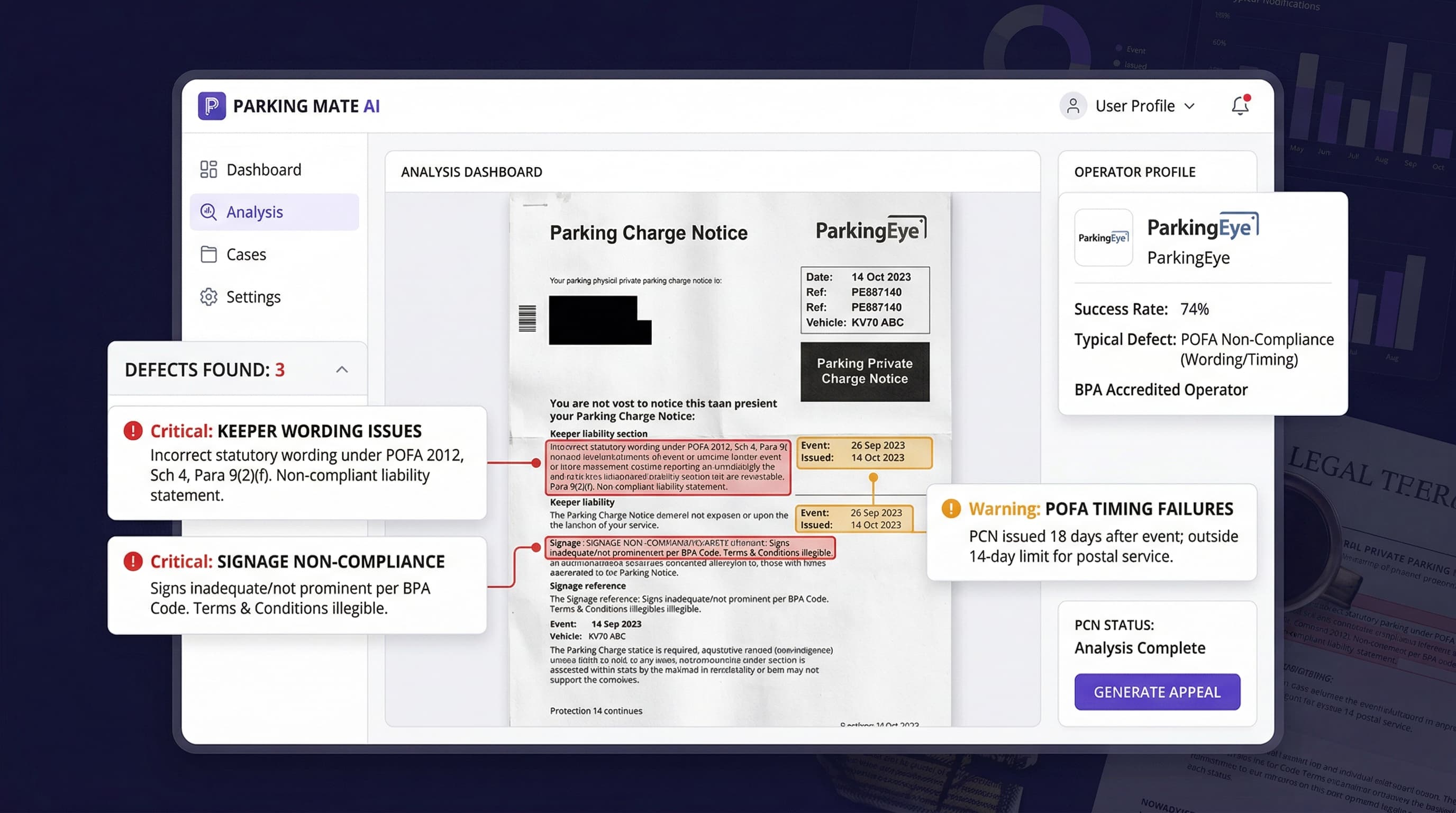
Received a Smart parking charge notice? Check it for defects in signage, timing, wording, and procedure before you pay.
What a Smart parking charge notice means for you
Receiving a Smart parking charge notice can be stressful, but it does not automatically mean you should pay. Many Smart Parking tickets contain defects in signage, wording, timing, or procedure. These defects can form the basis of a successful challenge.
The rules that Smart Parking must follow are detailed and specific. Smart Parking is a BPA member and must comply with the BPA code of practice and the Protection of Freedoms Act 2012.
Upload your notice and let Parking Mate AI check it against the requirements that apply to your exact situation. If defects are found, you will receive a professional letter ready to send.
What Parking Mate AI checks on your Smart parking charge notice
Signage and notice wording
The signs at the Smart Parking car park and the wording on your notice must meet specific BPA code standards. Missing or unclear signs are one of the most common defects.
POFA 14-day timing
Smart Parking must serve a notice to keeper within 14 days. A late notice can mean the registered keeper is not liable for the charge.
Procedure and process errors
Smart Parking must follow a set process when pursuing a charge. Skipped steps or incorrect procedures weaken their position.
Evidence and documentation gaps
Smart Parking must hold and present proper evidence. Missing ANPR images, logs, or records can undermine the charge.
Evidence and information to keep together
A photo or copy of the Smart parking charge notice
Any earlier notices, reminders, or letters from Smart Parking
Photographs of the car park signage if available
A note of the key dates
Any correspondence with Smart Parking or POPLA
Related pages
Smart Parking Charge Notice Appeal
Appeal a Smart parking charge notice appeal with Parking Mate AI.
Smart Parking Reminder Notice
Challenge a Smart Parking reminder notice with Parking Mate AI.
Smart Parking Debt Recovery Letter
Challenge a Smart Parking debt recovery letter with Parking Mate AI.
Smart Parking Letter Before Claim
Respond to a Smart Parking letter before claim with Parking Mate AI.
Smart Parking County Court Claim Defence
Defend a Smart Parking county court claim defence with Parking Mate AI.
Smart Parking County Court Judgment
Challenge a Smart Parking county court judgment with Parking Mate AI.
Smart Parking Help
Return to the main Smart Parking help page for an overview of all available support.
Smart Parking Charge Notice FAQs
Common questions about parking ticket appeals and how Parking Mate AI works.
What is a Smart parking charge notice and why have I received one?
A Smart parking charge notice is a demand for payment issued by Smart Parking for an alleged parking contravention. You have received one because Smart Parking's enforcement system has flagged your vehicle. It does not automatically mean you must pay. Many Smart Parking tickets contain defects worth checking.
How long do I have to check a Smart parking charge notice?
You typically have 28 days to appeal a Smart parking charge notice directly to the operator. If rejected, you can then escalate to POPLA. The earlier you check for defects, the more options you have.
Can I check a Smart parking charge notice myself?
Yes. You have the right to check a Smart parking charge notice. A properly structured challenge citing specific defects is far more effective than a generic complaint. Parking Mate AI helps you identify those defects.
What defects does Parking Mate AI check on a Smart parking charge notice?
Parking Mate AI checks your Smart parking charge notice for signage adequacy, POFA 14-day notice to keeper compliance, and charge amounts against the BPA code of practice cap. It also checks for required information on the notice and whether Smart Parking followed the correct procedure. The specific checks depend on the notice stage.
Should I pay a Smart parking charge notice straight away?
Not until you have checked whether the Smart parking charge notice is valid. Many Smart Parking tickets contain defects in signage, timing, wording, or procedure. Checking before you pay costs nothing and may save you the full charge.
What evidence should I keep for a Smart parking charge notice?
Keep the Smart parking charge notice itself, all earlier notices and letters, and any photographs of the car park signage. Also save screenshots of correspondence with Smart Parking and a written note of key dates. The more evidence you preserve early on, the stronger your position if the case escalates.
What is the POFA 14-day rule and how does it affect my Smart parking charge notice?
Under the Protection of Freedoms Act 2012, Smart Parking must serve a notice to keeper within 14 days of the parking event or of obtaining keeper details from the DVLA. If Smart Parking missed this deadline, the parking charge notice may only be enforceable against the driver, not the registered keeper. This is one of the most common defects and one of the most effective grounds for challenge.
What happens if I ignore a Smart parking charge notice?
Ignoring a Smart parking charge notice usually leads to escalation. Smart Parking will typically send reminders, pass the debt to a collection agency, and may eventually file a county court claim. Responding early keeps more options open.
Does Smart Parking handle parking charge notice cases differently from other operators?
Each operator has its own patterns of enforcement and common defects. Smart Parking is a BPA member processing approximately 2,200 DVLA enquiries per day, and commonly operates at shopping centres, retail parks, healthcare sites, universities. Parking Mate AI applies Smart Parking-specific checks so the defect report is tailored to how Smart Parking operates.
How does Parking Mate AI help with a Smart parking charge notice?
Upload a photo of your Smart parking charge notice and Parking Mate AI reads the details automatically. It checks against BPA code requirements, POFA timing rules, signage standards, and procedural obligations specific to Smart Parking. If defects are found, you can get a professional appeal letter targeting the specific issues on your Smart Parking notice.
Need help with a Smart parking charge notice?
Upload your notice for a free Parking Mate AI defect check. Most results are ready in minutes, and if grounds are found you can get a professional appeal letter straight away.
