Received a Notice to Keeper? Check It Before You Pay
This is a keeper liability notice, not a court summons. It must meet strict timing and content rules under the Protection of Freedoms Act. We analyse your Notice to Keeper for DVLA timing defects, missing information, and procedural failures and generate a structured appeal if issues are found.
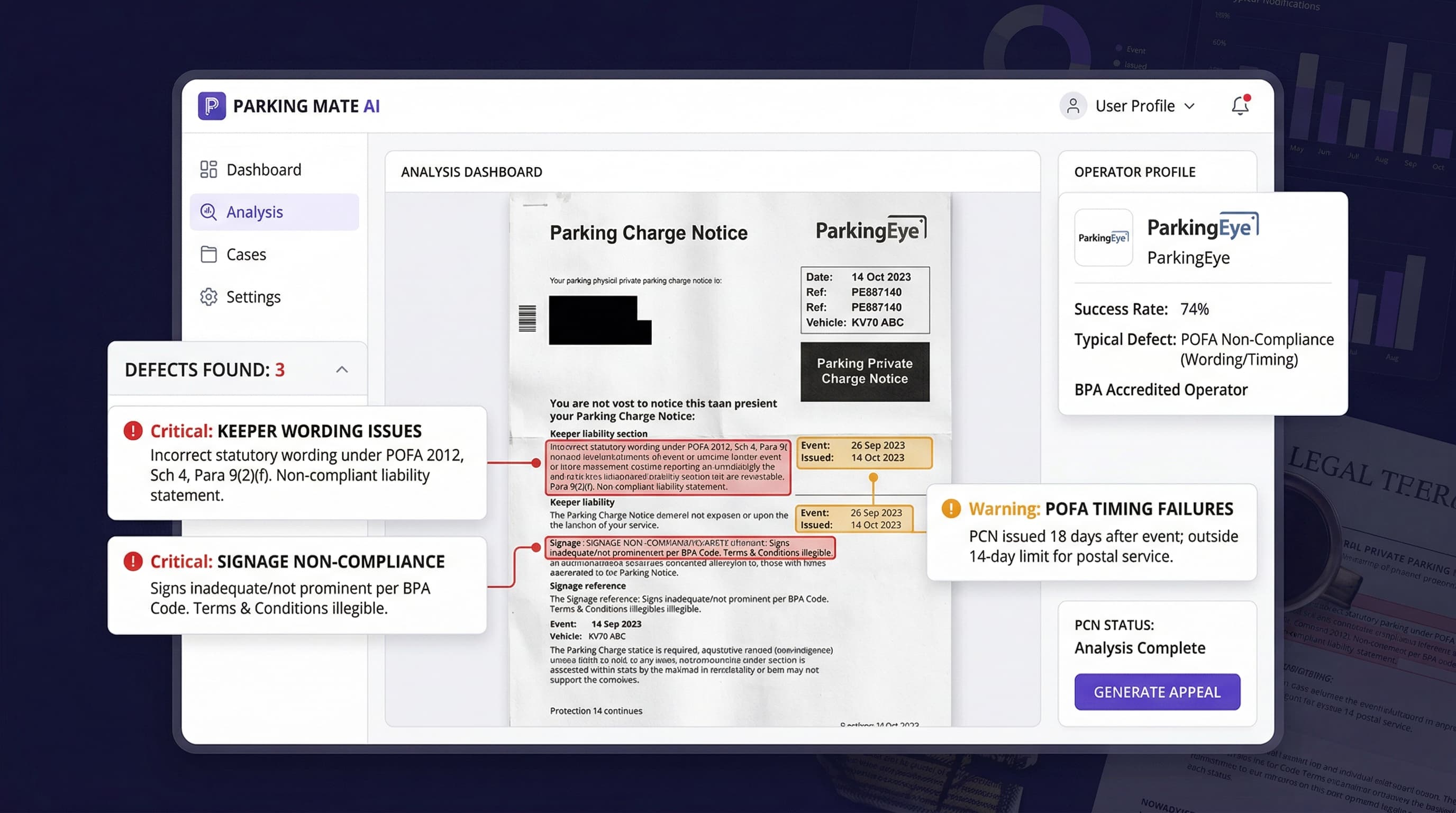
A Notice to Keeper is the letter a private parking operator sends to the registered keeper of the vehicle after obtaining details from the DVLA. It must be sent within a strict time limit and must contain specific prescribed information. If the operator missed the deadline or left out required content, the notice may not be enforceable against the keeper. Check yours before paying.

What you get
Full AI analysis of your Notice to Keeper for timing and content defects
Check whether the NTK was served within the statutory timeframe from the DVLA
Verification that all required legal information is included on the notice
Assessment of whether the keeper liability conditions have been properly met
Professional appeal letter citing the specific defects found on your NTK
Step-by-step guidance on responding to the operator or escalating to POPLA
Result
A structured appeal letter ready to send to the parking operator, citing the exact timing and procedural issues found on your Notice to Keeper.
What this notice to keeper means for you
Receiving this notice to keeper can be stressful, but it does not automatically mean you should pay. Many of these notices contain defects in signage, wording, timing, or procedure that can form the basis of a successful challenge.
The rules that private parking operators must follow are detailed and specific. A missing sign, a late notice, or an incorrect code can all make the difference between a valid charge and one that should be cancelled.
Upload your notice and let Parking Mate AI check it against the requirements that apply to your exact situation. If defects are found, you will receive a professional letter ready to send.
Why this notice may be challengeable
Signage and notice wording
The signs on site and the wording on your notice must meet specific legal standards. Missing or unclear signs are one of the most common defects.
Timing and deadlines
There are strict time limits for issuing notices at every stage. A late notice can be grounds for cancellation.
Procedure and process errors
The issuer must follow a set process when pursuing a charge. Skipped steps or incorrect procedures weaken their position.
Evidence and documentation gaps
Operators and councils must hold and present proper evidence. Missing photos, logs, or records can undermine the charge.
Evidence and information to keep together
A photo or copy of the notice or letter
Any earlier reminders or replies
Relevant photos, screenshots, or records
A note of the key dates
Anything that supports your version of events
Likely challengeable
Private parking charges must meet strict requirements under POFA 2012. Common grounds include defective keeper liability notices, inadequate signage, and procedural failures.
Upload your notice from the operator for a free defect check. Most results are ready in minutes.
Related pages
Received a Ticket on Your Windscreen
Got the original windscreen ticket rather than a keeper notice? Start here instead.
Received a Reminder or Chaser Letter
Already past the NTK stage and receiving follow-up letters? The original defects still apply.
Not Sure What Stage This Is
Start with a free check. We will identify your notice and recommend the correct next step.
Notice to Keeper FAQs
Common questions about parking ticket appeals and how the service works.
What does this notice to keeper mean, and why might you have received it?
This notice to keeper is a notice issued by a private parking company as part of their enforcement process. You have received it because the parking operator is pursuing a parking charge against you or the registered keeper of the vehicle. It does not automatically mean you must pay. Many notice to keeper documents contain defects worth checking.
How long do I have to respond to this notice to keeper?
For a private parking notice to keeper, you typically have 28 days to appeal to the parking operator. If the appeal is rejected, you then have a further window to escalate to the independent appeals service (POPLA or IAS depending on the operator's trade association). Check this notice to keeper promptly. The earlier you act, the more options you have.
Can I appeal or challenge this notice to keeper?
Yes. You have the right to appeal to the operator and then to an independent appeals service. A challenge to this notice to keeper is more likely to succeed when it cites specific defects rather than making a general complaint about the charge.
Should I pay this notice to keeper straight away?
Not until you have checked whether this notice to keeper is valid. Many private parking charges contain defects in signage, timing, wording, or procedure that undermine the issuer's position. Checking before you pay costs nothing and may save you the full charge.
What defects does Parking Mate AI check on this notice to keeper?
For a private notice to keeper, Parking Mate AI checks signage adequacy, the POFA 14-day notice to keeper deadline, charge amounts against code of practice caps, required information that must appear on the notice, and whether the parking operator followed the correct procedure at each stage. The specific checks depend on the notice type and stage.
What evidence should I keep if I challenge this notice to keeper?
Keep this notice to keeper, any photographs you can take of the location and signage, a note of the date and time, any earlier or later correspondence, and any receipts or records related to the parking event. The more evidence you preserve early on, the stronger your position if the case escalates.
What is the POFA 14-day rule and how does it affect this notice to keeper?
Under the Protection of Freedoms Act 2012, a private parking operator must serve a notice to keeper within 14 days of the parking event (or of obtaining keeper details from the DVLA) to hold the registered keeper liable. If this deadline was missed in your case, this notice to keeper may only be enforceable against the driver, not the keeper. This is one of the most common and most effective defects.
What happens if I ignore this notice to keeper?
Ignoring this notice to keeper usually leads to escalation. the parking operator will typically send reminders, pass the debt to a collection agency, and may eventually file a county court claim. Responding early, even if only to check for defects, keeps more options open.
Does it matter which operator sent my notice to keeper?
Yes. Different private parking operators have different signage standards, different enforcement patterns, and different approaches to appeals and litigation. The operator's trade association (BPA or IPC) also determines which independent appeals service you can use. Upload your notice to keeper and Parking Mate AI will identify the operator and apply the correct checks.
How does Parking Mate AI help with this notice to keeper?
Upload a photo of this notice to keeper and Parking Mate AI reads the details automatically. It checks the notice against POFA requirements, code of practice rules, signage standards, and procedural obligations specific to this notice type. If defects are found, you can get a professional appeal letter targeting the specific issues on this notice to keeper.
The bottom line
If you have received a notice to keeper from the operator, check it before you pay. Many private parking charges have defects in signage, keeper liability, or procedure. Upload yours for a free check.
Need help with this notice to keeper?
Upload your notice for a free Parking Mate AI defect check. Most results are ready in minutes, and if grounds are found you can get a professional letter straight away.
